Spinning at 15: The Teen Bands Taking Over America's Community Radio Airwaves
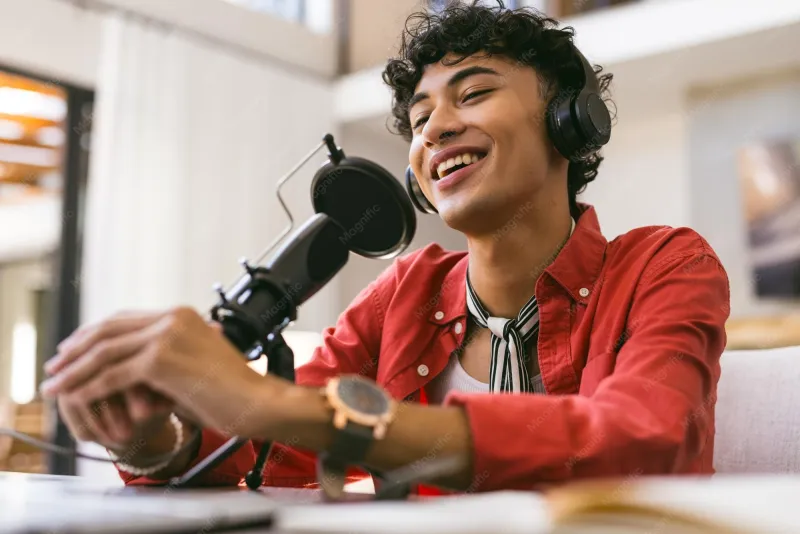
Photo: teenage band recording live session at small radio station studio microphone, via img.freepik.com
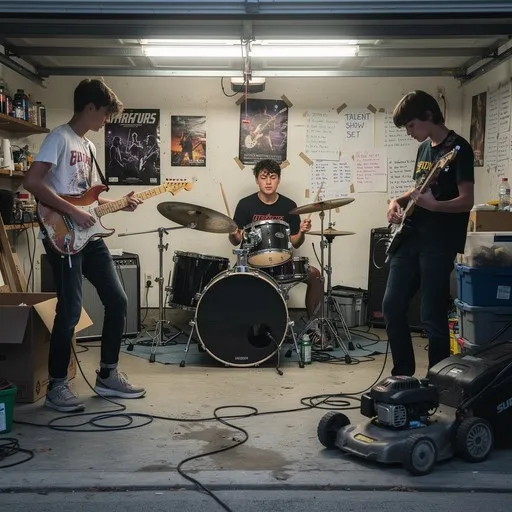
The session starts at 10 p.m. on a Tuesday, which is past bedtime for roughly everyone involved. Four teenagers from a band called Static Holiday haul their gear into a cinderblock building on the edge of a college campus in Athens, Ohio, where the station's overnight host is already eating cold pizza and cueing up their single. By 10:15, they're live on 91.3 FM, playing a song that has never been heard outside a basement in Columbus. Nobody at a label knows it exists. Nobody needs to. The listeners of a 3,000-watt community station just heard it anyway.
Welcome to the last great untamed corner of American radio — and the best-kept secret in the teen band playbook.
Why the Smallest Stations Take the Biggest Chances
If you've never spent time around college radio, low-power FM (LPFM), or a small-town community station, the culture shock is real. These aren't the corporate outlets running the same forty songs on repeat. A station like WFMU in New Jersey, KVRX in Austin, or any of the hundreds of LPFM broadcasters dotting the map from rural Vermont to coastal Oregon operates on a simple premise: play what's interesting, not what's charting.
That philosophy is a lifeline for young bands. A programmer at a community station isn't checking your streaming numbers or your follower count. They're checking whether the song is good. When a 16-year-old guitarist from Tacoma sends in a track recorded in a bedroom, that's not a red flag — at a lot of stations, that's the whole point.
"We've had high school bands come in for live sessions that were rougher than anything a touring act would give us," one longtime music director at a Midwest college station told us. "And they were more fun. The listeners can tell when a band is hungry. That energy doesn't come from a press kit."
The First Session: What Actually Happens
A live radio session is the great equalizer. No lighting rig, no crowd of friends screaming your name, no second takes hidden by a noisy room. Just you, a couple of microphones, a board operator, and maybe a handful of insomniacs listening on the drive home.
Bands that survive their first session tend to share a few habits:
- They rehearse the quiet parts. Radio mics catch everything, including the nervous count-off you've never noticed before.
- They prepare for the interview. Ten minutes of dead air because nobody thought of an answer to "so, how'd you guys meet?" is a rite of passage. It doesn't have to be yours.
- They bring the song that defines them, not the longest song. Programmers remember hooks, not run times.
- They say the station name and their band name out loud. Repeatedly. It feels dorky. It works.
Static Holiday's frontwoman, 17, put it plainly after her band's first session: "I was shaking through the whole first song. By the second one, I forgot the red light was even on. Now I kind of get why bands chase this."
The Playbook: Getting Your Single Into Rotation
Here's the part you actually came for. Getting played on community and college radio is dramatically easier than any other door in the music business — but only if you follow the unwritten rules.
Find the right stations first. Search for college stations within a two-hour drive, plus any LPFM broadcasters in your town. Look for ones with a music blog, a playlist submission page, or a "local shows" segment. If their charts include unsigned bands, you've found a target.
Send a real email to a real person. Find the music director's name — it's usually on the station's website. One short paragraph: who you are, where you're from, a link to one song, and an offer to do a live session. Attach nothing. Mass-blasting an MP3 to twenty addresses gets you deleted.
Lead with local. A station in your state cares that you're from their state. "Teen trio from Springfield, our first single, recorded at the high school studio" beats any amount of hype language.
Show up in person. Stations love listeners. Request your own song (yes, really — DJs remember the band that called), show up to their pledge drives, and offer to play their benefit shows. Community radio runs on community.
Follow up once, politely. Two weeks later, one friendly nudge. Then move on to the next station. There are hundreds.
Why This Matters More Than a Playlist Placement
A spin on a community station doesn't come with an algorithm behind it. What it does come with is a stamp of credibility from a human being who chose your song on purpose — plus, often, an archive link, a live session recording you can use in your press kit, and a DJ who will remember your band's name the next time you roll through town.
For the parents reading this: these sessions are safe, supervised, and surprisingly formative. Kids learn to speak on a microphone, to perform without a safety net, and to treat a small media outlet with respect. Those are skills that outlast any single gig.
The corporate radio gatekeepers may never open the door for a band that can't legally drive to their own studio session. The good news is they don't have to. Somewhere in your town tonight, a red ON AIR light is glowing above a board operator who genuinely wants to hear what you've been working on.
Send the email. Bring the song. Say the station name twice.
That's how future rockstars get made — one spin at a time.