Rival School Colors, One Shared Amp: The Quiet Truce of America's Suburban Practice Rooms

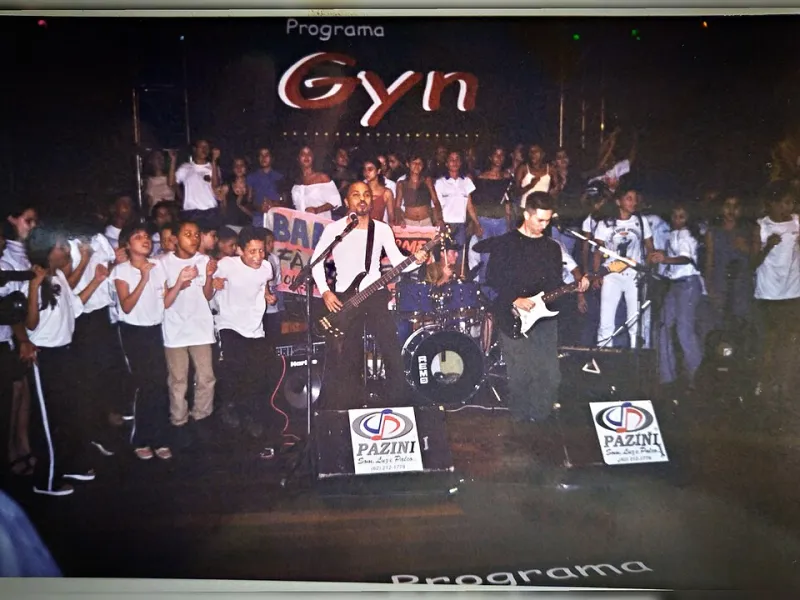
Photo: Raph_PH, CC BY 2.0, via Wikimedia Commons
The Rivalry Ends at the Door
There's a cinderblock rehearsal studio off Route 9 that sits roughly equidistant between two New Jersey high schools whose football games require extra police presence. Inside that studio, on any given Saturday, you'll find a situation that would confuse the pep rally faithful: the drummer from one school's top band and the bassist from the other school's top band, sharing a cabinet amp and splitting a Gatorade.
Nobody here thinks about the rivalry much. They're too busy figuring out who's opening for whom at the all-ages show next month.
This is the quiet reality of suburban teen music scenes across America. The rivalries that play out on fields and gym floors mostly evaporate the moment a kid plugs into a shared amp. Music, it turns out, is a terrible vehicle for grudges and a great one for carpools.
The Communal Studio Boom
Ask around any decent-sized suburb and you'll find the same story: a few enterprising adults — often a former touring musician or a dad with a pole barn — convert a warehouse corner, a basement, or a defunct bowling alley annex into hourly rehearsal rooms. The economics only work when multiple bands from multiple towns fill the calendar.
That means the rooms themselves are engineered for mixing crowds. Band from the west side of the district books Tuesdays. Band from the east side books Thursdays. By the time the weekend showcase rolls around, everybody knows everybody's setlist.
In a collective outside Columbus, four bands from three different school districts share a single backline — amps, a PA, a drum kit. The arrangement started as pure necessity. Nobody's parents wanted four separate drum kits in four separate garages. Now it's a full-blown alliance, with a shared Google Calendar, a communal gear fund, and a group chat that doubles as the most effective booking network in the county.
Gear Swaps and the Birth of Trust
Every scene has its origin story, and most of them involve a borrowed piece of equipment. A borrowed amp is a powerful social contract. You take care of it. You return it. You show up to that band's next gig because you owe them one.
That's how the trust gets built — one loaned cable at a time. Kids who've never spoken at school are texting about pedal trades. A guitarist who can't afford a tuner learns to lend one out anyway. Before long, the schools that can't share a cafeteria table are sharing a 4x12 cabinet.
Veteran scene parents call it the gear swap effect. The first trade is awkward. The tenth is a friendship. By the twentieth, someone's mom is driving both schools' bands to a festival two states over.
Co-Booking: The Math That Ended the Feud
Here's the pragmatic truth that ends most suburban feuds: a two-band bill draws two crowds. A four-band bill draws four. When the bands from rival towns figure that out, the rivalry becomes a business model.
Co-booked shows — where each band brings its own fanbase, its own merch, its own parents with vans — routinely outdraw anything a single band could mount alone. The venue wins. The kids win. The parents, who were going to sit in a folding chair somewhere anyway, win.
The collectives that last treat booking like a potluck. Everyone brings something. The band with the biggest following takes the closing slot this time and opens for the smaller band next time. It's a rotation system older than some of the musicians using it, and it works because everyone understands the deal: my crowd tonight, your crowd in March.
Why Cooperative Scenes Outlast the Competitive Ones
Every town has seen the other kind of scene — the one built on one-upmanship, where bands guard their contacts and refuse to share a stage. Those scenes burn bright and die fast. When the one big band graduates or implodes, there's nothing underneath it.
Cooperative scenes have roots. When a member graduates, the underclassmen from all three towns already know each other. When a venue closes, the network finds a new one in a week. When a drummer quits, there are three replacement candidates in the group chat by dinner.
The kids running these collectives rarely frame it in grand terms. Ask them why they partner with the rival school's bands and you'll get shrugs: "They have a van." "Their singer knows the sound guy." "We needed a fourth band for the show to work."
Which might be the real lesson here. The rock and roll mythology says scenes are forged in conflict — battles, beefs, showdowns. But the scenes actually surviving in America's suburbs were built by teenagers who figured out something their elders in the industry often haven't: the enemy isn't the band across town. The enemy is an empty room.
For the Parents Taking Notes
If your kid's band is butting heads with the band across town, resist the urge to stoke the competition. The single most valuable thing you can do is make an introduction. Drive to the other rehearsal space. Offer the spare amp in your garage. Mention that the coffeehouse downtown books all-ages bills.
The rivalry will still be there on Friday nights under the stadium lights. But by Saturday afternoon, there's a good chance your kid and their supposed rival will be in a cinderblock room somewhere, arguing about hi-hat clutches and planning a spring show.
That's not a betrayal of the school colors. That's how the next generation of rock stars learns the most important skill in music: nobody builds a scene alone.