The Riffs That Start It All: Inside the Cover Songs That Launch America's First Bands
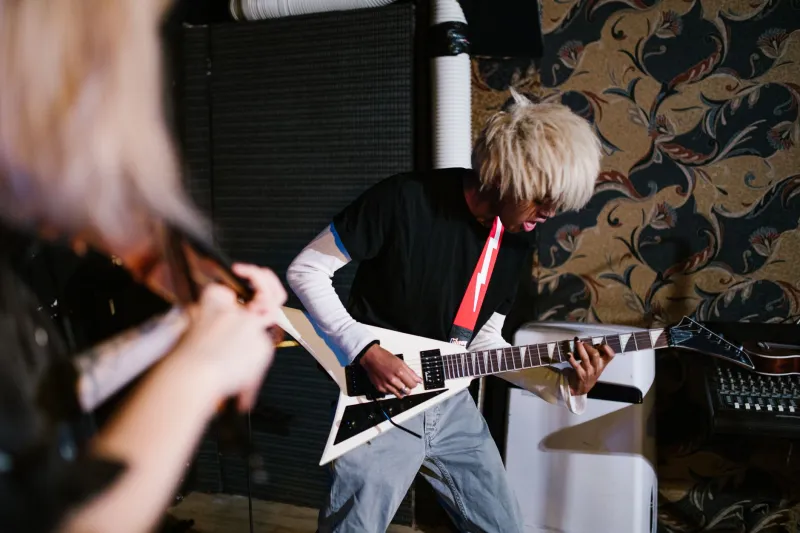
Ask any music teacher in America what happens during the first week of a new rock program, and you'll get the same answer: somebody asks for "Seven Nation Army." Every time. Every city, every state, every school year.
There's a reason for that. The White Stripes' most famous song is built on a riff that fits under four fingers, sits on one string, and sounds enormous even when it's played on a beat-up Squier through a ten-watt practice amp. It's the musical equivalent of a secret handshake — one note in, and everyone in the room knows what you're doing.
But it's not alone. There's a small, unofficial canon of songs that show up in middle school band rooms from Ohio to Oregon, and talking to the kids and instructors who play them reveals something bigger: these covers aren't just practice material. They're how young musicians figure out who they want to be.
The First Riff Is a Rite of Passage
Ask a room full of sixth graders what made them pick up an instrument and the answers cluster around a familiar list. "Smells Like Teen Spirit." "Smoke on the Water." "Sunshine of Your Love." "Back in Black." "Come As You Are." And yes, "Seven Nation Army," which has somehow become the unofficial national anthem of beginning guitarists.
"There's a reason these songs survive," says a band director we spoke with at a middle school showcase outside Austin. "They're all built on one or two shapes that a kid can learn in an afternoon, but they sound like the real thing. That gap — between how easy it is and how big it feels — is where confidence gets built."
That's the magic formula. A beginning drummer can hold down the backbeat to "Teen Spirit" after a week. A bassist can play the "Come As You Are" line before their second lesson. Suddenly a kid who couldn't get through "Hot Cross Buns" in band class is standing in a basement making a sound that feels genuinely powerful.
More Than Just Notes
What's interesting is what happens after the riff. Teachers consistently report that the cover song is just the doorway — the real learning starts once a kid can play it.
"A student learns 'Seven Nation Army,' and then they want to know why it works," one instructor told us. "Why does one note repeated feel so heavy? Why does the whole crowd at a baseball stadium sing along? That's music theory sneaking in the back door."
Students describe it a little differently. For them, the first cover is a taste test. Learn three Nirvana songs and you start wondering what else Kurt Cobain listened to. That leads to the Pixies, then to older punk, then to something entirely your own. The gateway riff doesn't replace a kid's original taste — it reveals it.
"I learned 'Smoke on the Water' because my dad played it for me," says one eighth-grade guitarist at a youth showcase in the Chicago suburbs. "But then I found the live versions, and the live versions are way different, and that got me into how bands change songs when they play them on stage. Now I want to write stuff that sounds different every time we play it."
That's the pipeline in action: cover song, to deep dive, to original music. It happens over and over, and it's one of the quietest, most reliable talent pipelines in American music.
Why the Canon Never Changes
You'd think a generation raised on streaming and TikTok would have a completely different starter list. Not really. New songs do make the cut — Billie Eilish and Olivia Rodrigo show up in modern setlists, and a well-placed pop hook can teach a kid more about songwriting than any exercise book. But the classic starter riffs persist, and the reason is simple: they were written to be played by young bands.
Deep Purple wrote "Smoke on the Water" with power chords a beginner could grab. Nirvana's biggest hit is two verses of quiet-loud dynamics that teach arrangement without saying a word. These songs aren't just famous — they're pedagogical by accident. They're the reason a forty-year-old riff can still light up a twelve-year-old's face in 2025.
From Cover to Confidence
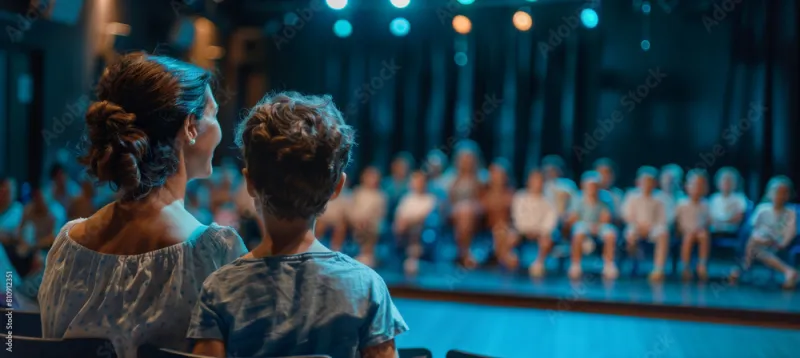
Ask veteran music teachers what the first cover song actually buys a kid, and the answer is never "guitar technique." It's the moment at the first showcase when a band of seventh graders plays something the audience recognizes and the crowd reacts. That reaction — the heads nodding, the parents singing along — is the fuel that keeps a young band practicing through the awkward months.
The riff never dies because it never has to. Every year, a new class of kids picks it up, plays it badly, plays it better, and uses it to climb toward something of their own. Somewhere in America right now, a sixth grader is hunting through the E string for that one note. Give it a year. They'll be writing their own.